
From linear to circular: Life cycle thinking at the core of sustainable growth
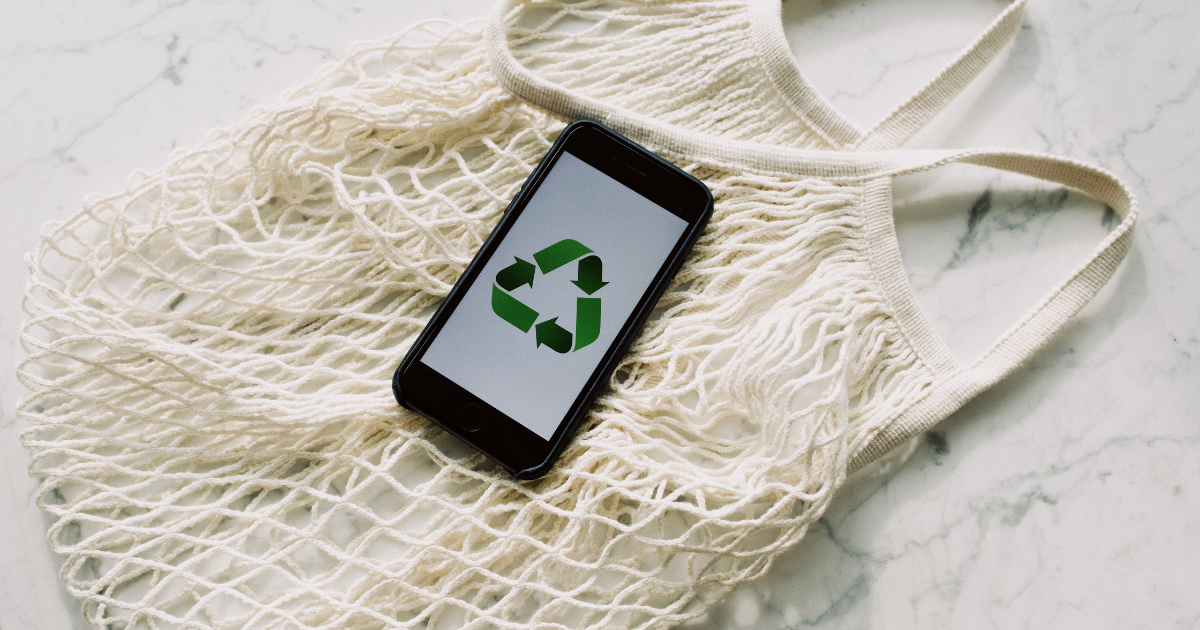
Think about your smartphone. Its life begins with mining metals in different parts of the world. The materials are processed, the phone is assembled in a factory, shipped across continents, used for a few years, and then often left in a drawer or thrown away. Every stage uses energy and raw materials. Every stage creates emissions and waste. Life cycle thinking looks at this entire journey instead of just one part of it.
Life cycle thinking (LCT) is a way to understand how products, services, and processes affect the environment, society, and economy from raw material extraction to final disposal. The main idea is simple: if we improve one stage, we should not create bigger problems somewhere else. For example, reducing energy use during manufacturing sounds positive, but if the product then consumes more electricity during use, the total impact may increase. A fridge that’s production takes less materials and energy can still lead to higher total emissions if it consumes large amounts of electricity. In contrast, a model that required more resources at the production stage may have a lower overall impact if it operates efficiently throughout its lifetime.
Life cycle thinking in everyday choices
Sustainability discussions often focus on companies and what they should change, but life cycle thinking also applies to personal choices. When we buy clothing, electronics, or household appliances, we are influencing the full life cycle of those products. A durable winter jacket worn for ten years usually has a lower overall impact than three cheaper jackets replaced every few seasons. The same logic applies to furniture, laptops, bicycles, and even holiday decorations.
Life cycle thinking also shifts how we view waste. We often focus on packaging because it is visible and easy to criticize. In reality, packaging is often only a small part of a product’s total impact. For many goods, the largest footprint comes from raw material extraction, manufacturing, transport, and energy use during the product’s lifetime. With clothing, for example, production and repeated washing can consume significant amounts of energy and water. This means our daily habits, such as how often we wash clothes and at what temperature, influence the overall impact as well.
From waste to circular economy
Life cycle thinking connects closely with the circular economy. The traditional linear model follows a simple path: take resources, make products, use them, and throw them away. A circular approach aims to keep materials and products in use for as long as possible. In practice, this can mean repairing a broken coffee machine instead of replacing it, buying second-hand furniture, choosing products with spare parts available, sharing rarely used tools, or returning old electronics for proper recycling. These actions extend product life and reduce the need for new raw materials.
Measuring and applying life cycle thinking
To measure environmental impacts more precisely life cycle assessment (LCA) can be used. LCA is the analytical method behind life cycle thinking and measures environmental impacts across a product’s entire life. It calculates energy use, emissions, and resource consumption from start to finish. While most people will not perform LCA themselves, its results are reflected in product information such as energy labels and environmental ratings. Consumers can then use that information when purchasing new products. For example, energy labels in the European Union help consumers compare devices based on electricity consumption over time.
Adopting life cycle thinking does not require technical knowledge. It often contains simple questions. How long will this product last? Can it be repaired? Does it consume a lot of energy during use? What happens when I no longer need it? A cheap product that breaks quickly may appear affordable at first, but over ten years it can require more resources and money than one durable alternative.
Moving from a linear to a circular mindset is not only a responsibility of industries. Our daily decisions influence demand, production volumes, product design, and waste streams. When we value durability, repairability, efficient energy use, and material recovery, markets respond over time. Fewer resources are extracted, less waste is generated, and products remain in circulation longer. Life cycle thinking simply reminds us that every product has a story. When we start to see that, it is easier to embed sustainability in our daily choices.
References:
European Commission. (2012). Life cycle indicators framework: development of life cycle based macro-level monitoring indicators for resources, products and waste for the EU-27. European Commission, Joint Research Centre, Institute for Environment and Sustainability.
European Commission (2026). Energy Efficient Products - Consumers. Energy, Climate Change, Environment. https://energy-efficient-products.ec.europa.eu/consumers_en
Marsh, A. T., Velenturf, A. P., & Bernal, S. A. (2022). Circular Economy strategies for concrete: Implementation and integration. Journal of Cleaner Production, 362, 132486. https://doi.org/10.1016/j.jclepro.2022.132486
Mazzi, A. (2019). Introduction. Life cycle thinking. In Elsevier eBooks (pp. 1–19). https://doi.org/10.1016/b978-0-12-818355-7.00001-4
Onat, N., Kucukvar, M., Halog, A., & Cloutier, S. (2017). Systems thinking for life cycle sustainability assessment: A review of recent developments, applications, and future perspectives. Sustainability, 9(5), 706. https://doi.org/10.3390/su9050706
Rigamonti, L., & Mancini, E. (2021). Life cycle assessment and circularity indicators. The International Journal of Life Cycle Assessment, 26(10), 1937–1942. https://doi.org/10.1007/s11367-021-01966-2
Zanni, S., Awere, E., & Bonoli, A. (2019). Life cycle sustainability assessment: An ongoing journey. In Elsevier eBooks (pp. 57–93). https://doi.org/10.1016/b978-0-12-818355-7.00004-x
